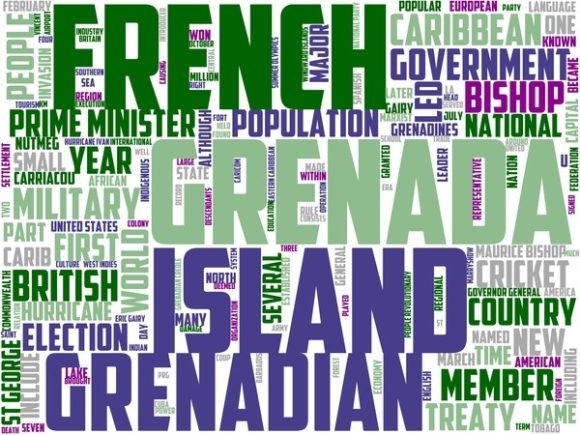
Harrisburg Wordart Book Cover: A Versatile Design Asset for Creative Execution
The Harrisburg Wordart Book Cover isn’t just a decorative graphic—it’s a functional design element built for integration. Unlike static templates that lock you into rigid layouts, this hand-drawn, colorful wordcloud is engineered for adaptability across physical and digital workflows. Its value emerges not in isolation, but in how it connects to your existing tools, timelines, and output goals—whether you’re finalizing a self-published ebook, launching a small-batch apparel line, or designing classroom materials for student engagement.
Where It Fits in Your Creative or Business Workflow
Think of the Harrisburg Wordart Book Cover as a modular asset: it slots in wherever visual language needs to reinforce meaning, mood, or message. For authors and publishers, it often appears late in the pre-launch phase—after manuscript edits are locked and ISBNs assigned—but early enough to inform complementary assets like social media banners or email headers. For product-based creators, it may surface during prototyping: printed on a fabric swatch to test color balance before bulk textile printing, or scaled down to fit a ceramic mug mockup in Canva or Adobe Express.
In marketing and event planning, its role shifts toward consistency anchoring. When designing an invitation suite for a wellness retreat, for example, using the same wordcloud across the digital save-the-date, printed program, and embroidered tote bag creates subconscious cohesion. That doesn’t require identical placement—just shared typography rhythm, color weighting, and thematic emphasis (e.g., “clarity,” “balance,” “growth” appearing prominently in both the book cover and workshop handouts).
Practical Integration Across Tools and Platforms
Compatibility starts with file format—and the Harrisburg Wordart Book Cover typically ships as a high-resolution PNG with transparent background and layered PSD or AI files. That means no guesswork when importing into common tools:
- Canva users can drag the PNG directly onto any template, then use the “Position” and “Transparency” sliders to fine-tune layering without losing edge detail.
- Adobe Creative Cloud workflows benefit from the vector source files: adjust individual word angles in Illustrator for custom curvature around a circular badge, or apply non-destructive color overlays in Photoshop for seasonal variants (e.g., muted sage tones for spring, deep terracotta for fall).
- Print-on-demand platforms like Printful or Gelato accept the 300 DPI PNG without upscaling artifacts—just confirm bleed settings match your chosen product dimensions (e.g., 8.5" × 11" for notebooks, 12" × 16" for posters).
- Ebook formatting requires lighter optimization: export a compressed JPEG version (under 500 KB) with sRGB color profile to ensure consistent rendering across Kindle, Apple Books, and Kobo devices.
Crucially, the hand-drawn aesthetic holds up across scales. At thumbnail size on a Shopify product grid, the color blocks and organic spacing remain legible. Enlarged to 48" wide for a trade show backdrop, the subtle texture in the lettering adds tactile authenticity—no pixelation, no flatness.
Workflow Examples You Can Adapt Today
Scenario 1: Launching a Guided Journal
You’ve written prompts for daily reflection and secured a printer for spiral-bound journals. Instead of treating the cover as a final step, use the Harrisburg Wordart Book Cover during user testing: embed it in a Figma prototype alongside interior page samples and ask testers which cover evokes “calm focus” most effectively. Their feedback informs not just cover choice—but also subtitle wording and even paper stock selection (e.g., uncoated matte for softer contrast against the vibrant words).
Scenario 2: Building a Cohesive Brand Kit
If you’re developing visual identity for a new coaching practice, treat the wordcloud as a living palette reference—not just decoration. Extract dominant hex codes (e.g., #4A90E2 for sky blue, #FF6B6B for coral accent) and add them to your brand style guide. Then apply those exact values to your website buttons, email signature divider, and Instagram story highlights—so the Harrisburg Wordart Book Cover becomes a bridge between emotional resonance and operational consistency.
Scenario 3: Classroom Resource Development
An educator designing a growth mindset unit might print the wordcloud on cardstock, cut out individual words, and use them in collaborative sorting activities (“Which words describe effort? Which describe outcome?”). Later, students scan their groupings into a shared Google Slides deck—where the original Harrisburg Wordart Book Cover appears as the unit’s title slide. The continuity reinforces learning objectives without explicit instruction.
What Makes It Sustainable Over Time
Long-term usability hinges on three factors: editability, scalability, and semantic clarity. The Harrisburg Wordart Book Cover excels here because its hand-drawn quality avoids over-polished rigidity—making it feel fresh months after download. More importantly, its word selection isn’t tied to fleeting trends (“synergy,” “disrupt”) but to enduring concepts (“courage,” “curiosity,” “resilience”). That means you can reuse it across projects years apart without visual whiplash.
Organization matters too. When storing the files, name them with context—not just “Harrisburg_Wordart.png” but “Harrisburg_Wordart_Cover_300DPI_Transparent.png” and “Harrisburg_Wordart_Vector_AI_Source.ai”. This saves time during deadline crunches and prevents accidental use of low-res versions in print contexts.
Quality control is simpler than it seems: before final export, zoom to 200% in your editor and check two things—first, that no word strokes blur or thin unexpectedly at small sizes; second, that color contrast meets WCAG 2.1 AA standards for text legibility (especially if overlaying white text on colored word areas). Most design apps include contrast checkers—use them.
Realistic Considerations Before You Begin
This asset works best when aligned with intent—not just aesthetics. If your goal is minimalist sophistication, the Harrisburg Wordart Book Cover’s vibrancy may compete with clean typography. In those cases, use it selectively: as a single accent element on an otherwise restrained layout (e.g., centered on the back cover of a hardcover book, or as foil-stamped detail on a business card corner).
Also consider audience context. A tech startup’s investor pitch deck likely benefits more from data-driven visuals than expressive wordclouds—unless the wordcloud illustrates team values on the “About Us” slide, where human dimension matters most. Match the tool to the moment, not the other way around.
Finally, remember that versatility requires intentionality. Don’t scatter the Harrisburg Wordart Book Cover across ten unrelated products hoping one “sticks.” Instead, pick one primary use case—say, custom notebook covers for your Etsy shop—master the production variables (bleed, trim, ink absorption), then expand to mugs or tote bags only after you’ve validated demand and refined your process.
When treated as part of a system—not a standalone flourish—the Harrisburg Wordart Book Cover supports clarity, accelerates execution, and quietly strengthens how your work is perceived. It doesn’t replace strategy. It makes strategy visible, tangible, and repeatable.